
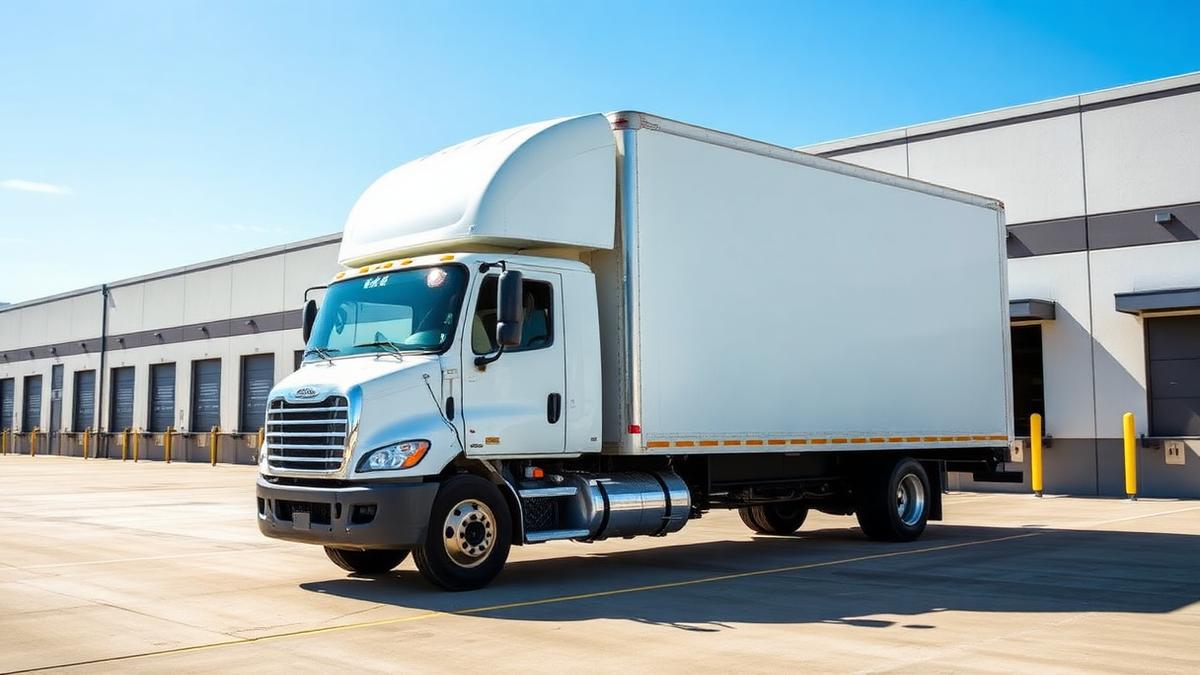
Quick answer
Box truck cargo contracts are recurring agreements with shippers, distributors, manufacturers, or third-party logistics companies to move freight on set lanes or schedules. You secure them by identifying companies near your base, proving reliability with clean authority and references, and offering a consistent weekly rate rather than chasing one-off spot loads on load boards.
Key takeaways
- Direct contracts usually pay more per mile and give predictable weekly revenue.
- Target local distributors, breweries, importers, furniture stores, auto parts warehouses, and regional 3PLs.
- You need active authority, cargo and liability insurance, a clean safety record, and a professional rate sheet.
- Recurring lanes beat high spot rates because they cut deadhead and phone time.
- A dispatcher can pitch your truck to hundreds of local shippers while you drive.
Why load boards are the wrong starting point for box trucks
Load boards work for 53-foot dry vans that can cover 500 miles in a day. For a 26-foot box truck with a 13,000-pound payload and roughly 1,000-mile realistic range, most posted freight is either too heavy, too far, or pays like an afterthought.
Worse, boards are anonymous. The broker picking the lowest bidder does not know your truck is clean, your ELD is perfect, and you show up on time. That makes box truck spot freight a race to the bottom. Contracts fix both problems: the freight fits your truck, and the shipper chooses you for reliability, not price alone.
The five best contract sources for box trucks
- Local distributors and wholesalers — food, beverage, paper goods, cleaning supplies, and packaged hardware move on box trucks daily.
- Import drayage to nearby warehouses — containers unloaded at a port or rail yard often need last-mile distribution within 150 miles.
- Regional 3PLs and freight brokers with dedicated local accounts — they subcontract recurring lanes to small fleets.
- Retail and grocery chains needing store deliveries, especially for smaller-format locations that cannot receive full trailers.
- Manufacturers and machine shops that ship parts, fixtures, or finished products to regional customers.
How to find the right companies near you
Start with the lane you want to own. Pick a 100-to-300-mile radius around your home base, then list the industries that produce or receive freight inside that circle. A few hours of research turns up more prospects than a week on a load board.
- Search Google Maps and Yelp for distributors, warehouses, breweries, and fulfillment centers within 50 miles.
- Use LinkedIn to find logistics managers, warehouse supervisors, and transportation coordinators by company name.
- Check your state's business directory and local chamber of commerce listings for manufacturers and importers.
- Visit industrial parks near truck-friendly highways — the signage on buildings tells you exactly who ships freight.
- Ask your current broker contacts which of their customers need local box truck capacity on a regular basis.
What shippers want to see before they contract you
A local warehouse manager does not care about your sales pitch. They care whether you will show up, protect the freight, and not complicate their day. Have these items ready before the first conversation.
- Active MC authority with at least 90 days of history and no active out-of-service orders.
- Primary liability ($1,000,000) and cargo insurance ($100,000 minimum) certificates ready to email.
- A clean safety record, low CSA scores, and a well-maintained truck with photos.
- Professional email, logo, rate sheet, and references from brokers or receivers you have already served.
- W-9, signed carrier packet, and the ability to track and communicate status in real time.
The 30-second pitch that opens doors
Cold outreach works when it is about their freight problem, not your empty truck. Use this script as a starting point for calls or emails.
"Hi [name], I am a local box truck carrier based in [city] with a 26-foot straight truck and liftgate. I noticed you distribute into [area] and I am looking for one or two shippers who need reliable regional coverage on a regular schedule. I run clean authority, same-day check calls, and photo PODs. Could I send over my insurance and W-9 for your carrier packet?"
The goal of the first contact is not to book a load. It is to get into their system so you are the first call when volume spikes or their current carrier falls through.
Turning one load into a recurring lane
Shippers will test you with one or two spot loads before offering a contract. Treat those tests like an interview. Arrive on time, send a professional rate confirmation, communicate any delay immediately, and deliver clean paperwork the same day.
- Ask for the backhaul: after a delivery, propose a regular return load from the same area.
- Offer a weekly dedicated rate instead of per-load negotiation — it simplifies their budgeting.
- Propose a set schedule: same pickup and delivery windows each week so they can plan around you.
- Track your own reliability: on-time percentage, damage-free deliveries, and invoice accuracy.
- Ask for a 30-day trial contract after three clean deliveries; a written trial makes it easier to convert to a long-term agreement.
Pricing a box truck contract so you actually profit
Contracts are only better than boards if the rate covers your all-in cost and leaves margin. Calculate your weekly fixed cost — truck payment, insurance, permits, phone, ELD — then add fuel, maintenance reserve, and driver pay per mile. Divide by paid miles.
- Price round trips, not one-way loaded miles — deadhead is real even on local routes.
- Add accessorials in writing: liftgate, inside delivery, detention after two hours, and extra stops.
- Build in fuel escalation tied to a published diesel index if the contract runs longer than 90 days.
- Avoid month-long exclusivity unless the volume is guaranteed; a cancellation clause protects your truck.
| Miles per week | All-in cost per mile | Target contract rate | Weekly gross at target |
|---|---|---|---|
| 1,200 | $1.65 | $2.20 | $2,640 |
| 1,600 | $1.55 | $2.05 | $3,280 |
| 2,000 | $1.45 | $1.95 | $3,900 |
Contract terms that protect a small carrier
A handshake is not a dispatch plan. Even a simple one-page agreement prevents disputes about payment terms, liability, and volume commitments.
- Minimum weekly volume or 30-day cancellation notice with pay for committed loads cancelled by the shipper.
- Payment terms of Net 15 or Net 30, and a clear process for submitting invoices, BOLs, and PODs.
- Detention, layover, and TONU language written into the rate confirmation.
- Insurance and liability limits spelled out, plus a hold-harmless clause where appropriate.
- Fuel surcharge adjustment tied to the DOE national average or a regional diesel index.
How Fifth Wheel Dispatch helps box trucks win contracts
Building a contract book takes hours every week: prospecting, carrier packets, follow-ups, rate negotiations, and paperwork. Our dispatchers do that work while you drive.
- We identify shippers and 3PLs in your home region that regularly move box-truck-sized freight.
- We send professional carrier packets, insurance certificates, and W-9s on your behalf.
- We negotiate recurring lanes and build a weekly schedule around your preferred home time.
- We handle rate confirmations, check calls, detention claims, and invoice support.
- We keep your truck out of the spot-rate gutter and on contracted, higher-paying freight.
Frequently asked questions
Can a box truck get direct shipper contracts without a load board?
Yes. Many local and regional shippers prefer direct carrier relationships for predictable capacity. Box trucks are ideal for last-mile, LTL, and short-haul regional freight that does not fit a full trailer.
What kind of freight pays best for a 26-foot box truck?
Regional distribution, expedited parts, furniture and appliance delivery, beverage and foodservice distribution, and import drayage to nearby warehouses typically pay well and reload consistently if you build relationships.
Do I need my own authority to contract directly with shippers?
Yes. Direct shippers and 3PLs will require your active MC authority, liability and cargo insurance certificates, W-9, and a signed carrier packet. Operating under someone else's authority makes direct contracting much harder.
How much negotiating room is in a box truck contract rate?
Less than spot freight. Shippers value reliability and simplicity, so they often accept a fair, consistent rate if you eliminate surprises. Build in fuel escalation and accessorials rather than trying to maximize every mile.
How long does it take to land a recurring box truck contract?
Some carriers book a trial load within a week, but most recurring contracts form after three to five clean deliveries over 30 to 60 days. Persistence and clean paperwork matter more than a low rate.
Can Fifth Wheel Dispatch help me find box truck contracts?
Yes. We dispatch box trucks, hotshots, dry vans, and specialized equipment across all 48 states. Our team prospecting, carrier packet management, and lane negotiation can help you build recurring local and regional freight. Call +1 (872) 255-5130 or email info@fifthwheeldispatch.com.
Want this handled for you instead?
Fifth Wheel Dispatch LLC dispatches owner-operators and small fleets across all 48 states — 13 equipment types, dedicated dispatchers, rate negotiation on every load, and full paperwork support. Standard 5%, fleet 4%, or hybrid at $49.99 per truck plus 3.5% weekly.
Keep reading
Most new authorities fail on cash flow, not on freight. Here is the setup, sourcing, and paperwork sequence that gets a brand-new MC loaded and paid in the first three months.
Brokers post a rate expecting a counter. Here is the data to gather before you call, the exact language to use, and how to hold your number without losing the load.
Not every load board is worth its subscription. Here is what each of the major boards actually delivers for a one-truck operation — and where the free options fall short.