
Quick answer
Car hauling risk management starts before the first vehicle is loaded: verify carrier equipment matches the load count and dimensions, photograph every vehicle from at least eight angles with timestamps, record pre-existing damage on a signed condition report, distribute weight correctly across the trailer deck, secure each unit with proper chains, straps, and wheel nets, and repeat the photo process at delivery. A dispatcher who enforces this workflow on every 3-car to 10-car haul reduces damage claim exposure, speeds up insurance disputes, and protects both the carrier's CSA score and the broker relationship.
Key takeaways
- One un-documented scratch can cost more than the linehaul — photo everything before and after loading.
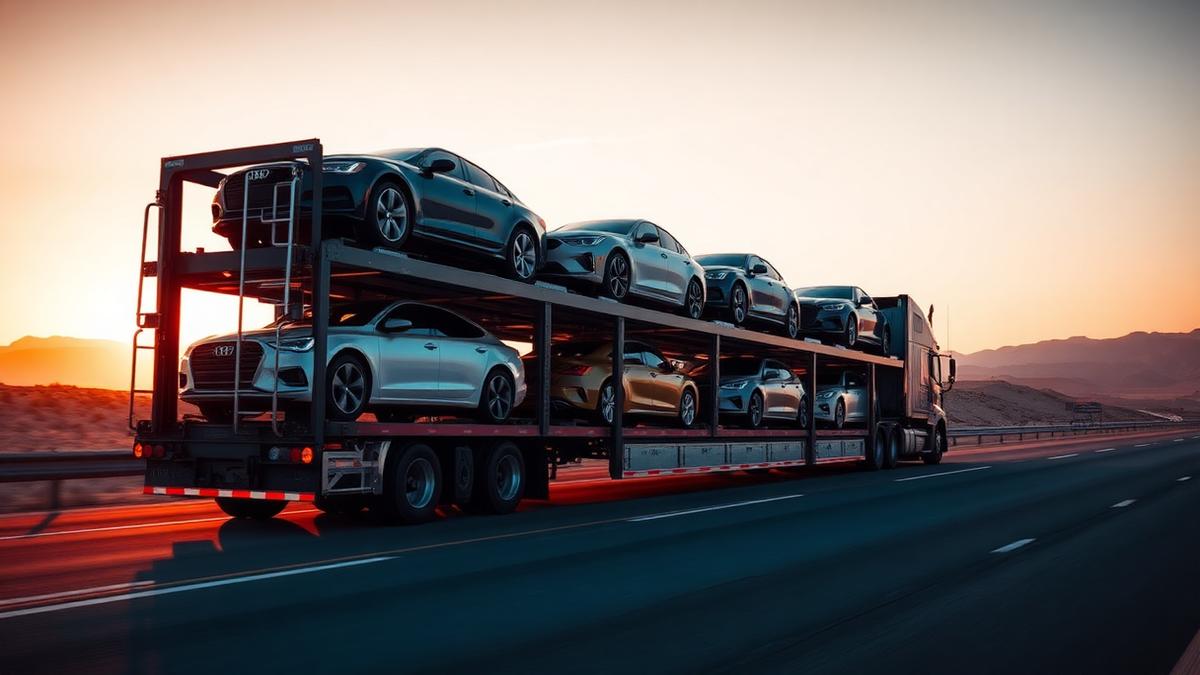
- Match the trailer to the count: 3-car hauls often use wedge or single-deck equipment, while 7-car to 10-car hauls need multi-level Cottrell or Miller-style carriers.
- Weight distribution matters as much as securement; heavy vehicles belong over the axles and low on the deck.
- Get the shipper and receiver to sign the condition report at both ends — unsigned reports are worthless in a claim.
- Never let the driver leave without a signed BOL, delivery receipt, and timestamped photo set.
Why car haul damage claims are so expensive
A single sedan door ding can run $800 to $1,500. A scratched bumper on a luxury SUV can exceed $3,000. When you are hauling seven to ten vehicles, the math gets dangerous fast: one rough loading day can erase a week of revenue and still leave you fighting the broker or shipper for months.
The real problem is not always the damage itself — it is the lack of proof. Carriers who cannot prove pre-existing damage, proper securement, and clean handoff absorb liability they never caused. Dispatchers are the first line of defense because they control what gets booked, what paperwork is required, and what the driver is told before pickup.
Booking the right equipment for the load count
Not every car hauler can handle every load. Before you confirm a rate, match the equipment to the vehicle count, dimensions, and weight. Booking the wrong trailer is the fastest way to create a damage claim.
| Load size | Typical equipment | Key risk |
|---|---|---|
| 1–3 cars | Wedge trailer, single-deck hauler, or hotshot flatbed | Overloading a small trailer or poor tie-down angles |
| 4–6 cars | Mini 5-car or 6-car open carrier | Deck height and vehicle overhang on mixed sizes |
| 7–9 cars | Standard 7-car or 9-car multi-level carrier | Top-deck clearance and weight balance front-to-rear |
| 10 cars | 10-car Cottrell/Miller-style heavy carrier | Axle weights, bridge laws, and tall vehicles on upper decks |
The pre-load documentation workflow
Photos are evidence. Condition reports are contracts. Do not let a driver pick up a vehicle until both are complete. The best practice is a timestamped photo set and a signed inspection report that the shipper acknowledges before the carrier leaves.
- Walk-around photos: front, rear, both sides, roof line, windshield, wheels, and interior dash showing mileage.
- Close-ups of every scratch, dent, chip, crack, or stain already on the vehicle.
- A signed condition report with the shipper's name, date, time, and VIN for each unit.
- Photo of the trailer deck before loading to prove it was clean and undamaged.
- Record fuel levels and battery condition if the vehicle is inoperable.
Loading sequence and weight distribution
How vehicles are ordered on the trailer directly affects stability, braking, and the risk of contact damage. Dispatchers should brief drivers on load plan before they arrive at the shipper.
- Heaviest vehicles go on the bottom deck and over the trailer axles, never on the top rear.
- Load front-to-rear in the order you will deliver, so the first drop is accessible without unloading other units.
- Leave clearance between vehicles — a hard brake can shift a car into the one in front of it.
- Check total gross weight and per-axle weights against state limits before leaving.
- For inoperable vehicles, confirm winch capacity and that the operator knows the neutral/steering unlock procedure.
Securement that actually protects the load
Four tie-downs per vehicle is the common rule of thumb, but the real standard is that the vehicle cannot move in any direction. Use the right gear for the trailer type and inspect it every stop.
- Use chains with ratchet binders or wheel nets rated for the vehicle weight — never rope or worn straps on a multi-car haul.
- Anchor at 45-degree angles when possible to control forward, backward, and side movement.
- Pad contact points on suspension arms, exhaust, and body lines to prevent rubbing damage.
- Recheck tension after the first 50 miles and at every fuel stop; straps loosen as vehicles settle.
- Close windows, lock doors, and remove loose items from cabins before transport.
In-transit checks and driver communication
The cheapest insurance is a driver who checks the load. Build these touchpoints into the dispatch plan so they are not skipped under pressure.
- First stop: walk the deck, re-torque binders, look for fluid leaks or shifting.
- Avoid routes with low bridges, tight turns, or steep grades that stress top-deck vehicles.
- Plan stops on level ground so the trailer does not lean and pinch vehicles together.
- Communicate delivery windows early so the receiver is ready; idle time leads to rushed unloading.
Delivery documentation and damage control
The delivery is where most claims are born or prevented. Do not release a vehicle until the receiver has inspected it and signed off, and never let the driver leave with only a verbal {"}it looks fine.{"}
- Repeat the full photo walk-around at delivery before the vehicle leaves the trailer.
- Compare the delivery condition report to the pickup report in front of the receiver.
- Note any new damage immediately, photograph it, and get the receiver's signature acknowledging it.
- Keep the signed BOL, delivery receipt, and both photo sets for at least 180 days.
- If damage is found, report it to the broker or shipper within 24 hours with photos attached.
Insurance, cargo limits, and claim mitigation
Cargo insurance is not optional on car hauls, and the declared value must match the real replacement cost of the load. A $100,000 cargo policy sounds generous until you are hauling four late-model trucks.
- Verify cargo limits before booking high-value or multiple new vehicles.
- Confirm whether the policy covers total loss, partial damage, theft, and Acts of God.
- Understand deductible amounts — a $2,500 deductible turns small claims into out-of-pocket losses.
- Keep maintenance records, driver logs, and inspection reports; insurers deny claims when documentation is missing.
- Use brokers and shippers with clear damage claim procedures written into the rate confirmation.
How Fifth Wheel Dispatch handles car hauling risk
We dispatch car haulers, hotshots, and multi-vehicle carriers across all 48 states. Before we book a 3-car to 10-car haul, we confirm trailer fit, set the documentation requirements, brief the driver on load sequence, and make sure cargo limits match the load value. After delivery we chase the paperwork so claims do not sit unresolved.
If you run car hauls and want the booking, documentation, and risk workflow handled for you, call +1 (872) 255-5130 or email info@fifthwheeldispatch.com.
Frequently asked questions
What is the most common cause of car haul damage claims?
The most common causes are poor securement leading to contact damage between vehicles, improper loading order causing weight shift, and missing pre-load documentation that makes the carrier liable for pre-existing damage. Most claims are preventable with photos, condition reports, and correct tie-downs.
How many photos should a driver take of each vehicle?
At minimum, take eight photos per vehicle: front, rear, both sides, both front corners, roof line, and dashboard odometer. Add close-ups of every pre-existing defect. Timestamped photos with geolocation are best for insurance disputes.
Who pays for damage found after delivery?
Liability depends on the documentation and the contract. If the carrier can prove the damage was pre-existing or happened before pickup, the carrier is usually not responsible. If the carrier cannot prove securement and condition at both ends, the carrier or their insurance often absorbs the claim.
Do I need special insurance to haul cars?
Standard motor carrier liability does not cover cargo damage. You need motor truck cargo insurance with limits high enough for the vehicles you haul. High-value, new, or luxury vehicles may require additional coverage or declared value endorsements.
What is the best trailer for a 10-car haul?
A 10-car haul typically requires a heavy-duty multi-level Cottrell, Miller, or similar professional car carrier built for that capacity. These trailers have the deck heights, hydraulic systems, and axle spacing needed to safely stack and transport ten vehicles within legal dimensions.
How can a dispatcher reduce car haul claims?
A dispatcher reduces claims by matching the right trailer to the load, requiring pre- and post-load photo documentation, briefing the driver on loading order and securement, confirming cargo insurance limits, and making sure signed condition reports are collected at both pickup and delivery.
Want this handled for you instead?
Fifth Wheel Dispatch LLC dispatches owner-operators and small fleets across all 48 states — 13 equipment types, dedicated dispatchers, rate negotiation on every load, and full paperwork support. Standard 5%, fleet 4%, or hybrid at $49.99 per truck plus 3.5% weekly.
Keep reading
Own a semi-tractor but no trailer? Power-only dispatch services let you haul pre-loaded trailers, skip trailer overhead, and run drop-and-hook freight across the United States.
They both find you loads, but they sit on opposite sides of the table. Here is exactly how dispatchers and brokers differ in who they represent, how they earn, and what they can legally do.
Brokers post a rate expecting a counter. Here is the data to gather before you call, the exact language to use, and how to hold your number without losing the load.